

Top 5 Tips for Choosing a Tattoo Shop in Denver, CO
Top 5 Essential Factors to Consider When Choosing a Tattoo Shop in Denver, CO: Expert Guide to Safe and Custom Tattoo Services

By Ben Gunn, Stay Local Tattoo and Piercing
Selecting an appropriate tattoo shop affects both the safety and the long-term outcome of the work. In Denver’s varied tattoo market, evaluating core criteria will support an informed decision. This guide examines five principal considerations—safety standards, customization options, artist qualifications, shop cleanliness, and customer feedback—so that clients receive safe, professionally executed tattoos aligned with their aesthetic objectives.
Safety Standards
Safety standards are fundamental to tattoo practice because they determine client health outcomes. A reputable establishment implements comprehensive hygiene protocols, employs sterile equipment, keeps the workspace consistently sanitised, and operates in accordance with applicable local health regulations.
Research consistently highlights the importance of robust health policies and licensing for tattoo artists to ensure public safety.
Tattoo Artist Licensing & Health Policy
Results: There were 5 health policy related items evaluated: 1) tattoo artists should be licensed, 2) tattoo artists need training on bloodborne pathogens and communicable diseases, 3) tattoo regulations help prevent infectious diseases, 4) tattoo laws and regulations are enforced in my area, and 5) tattoo establishments should be licensed.
Evaluation of tattoo artists’ perceptions of tattoo regulations in the United States, 2016
What Are the Hygiene and Safety Standards to Expect from a Denver Tattoo Shop?
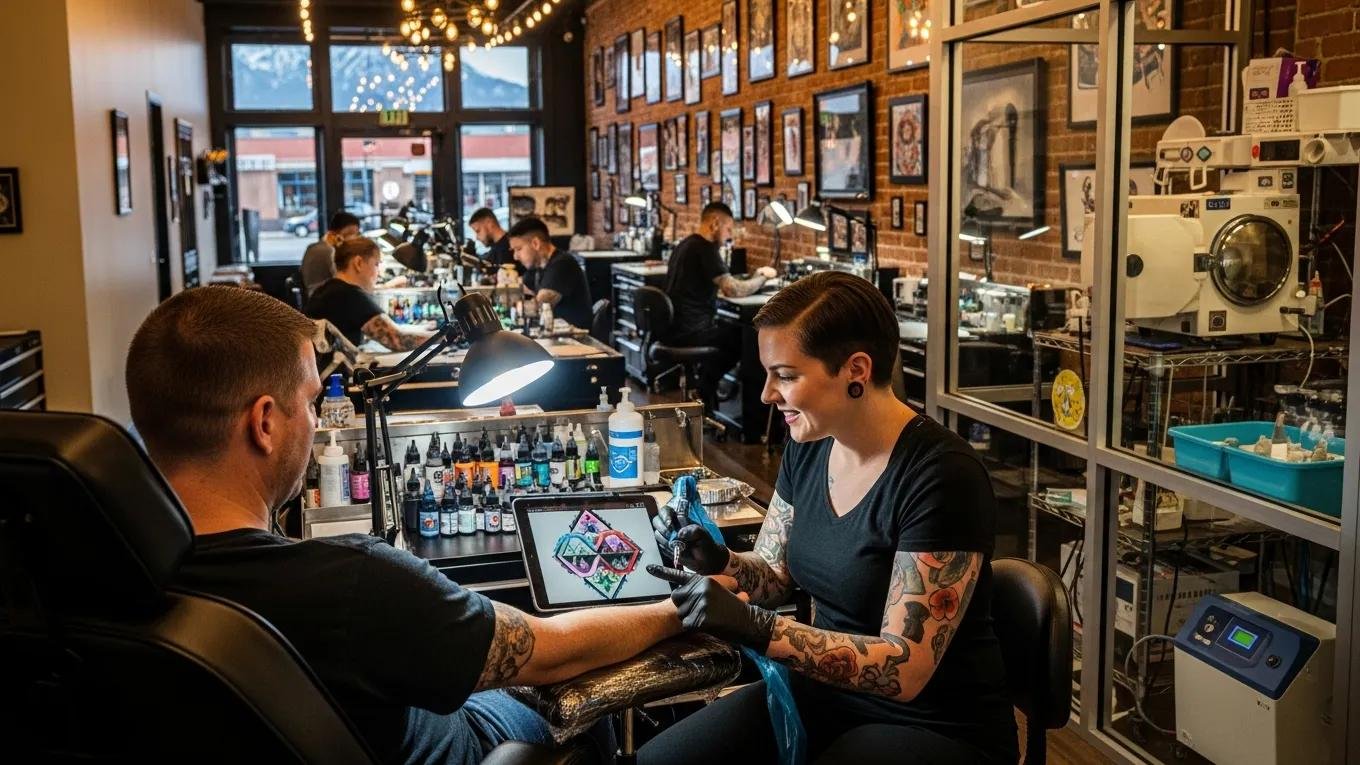
When attending a tattoo studio in Denver, expect observable practices such as use of single-use needles and disposable supplies, systematic disinfection of work surfaces between clients, and visible evidence of compliance with local health inspection and licensing requirements.
- Sterile Equipment: All tattoo needles and equipment should be single-use and disposed of properly after each session.
- Clean Workspace: The tattoo area should be clean and organized, with surfaces disinfected before and after each client.
- Compliance with Health Regulations: The shop should comply with local health department regulations, which may include regular inspections and certifications.
Studies further emphasize the critical role of infection control and sterilization procedures in personal service establishments like tattoo shops to mitigate public health risks.
Tattoo Shop Infection Control & Sterilization Regulations
ABSTRACT: Background: The purpose of this study was to examine infection control and sterilization procedures in relation to invasive services performed at Personal Service Establishments (PSEs) in British Columbia. The objective was to collect data on opinions of regulation and infection control practices from persons currently working in the industries of tattooing, micro-blading and permanent make-up.
The public health impact of infection control, sterilization and regulation in tattooing, 2017
How Does Stay Local Tattoo Ensure Compliance with Hygiene Protocols?
Stay Local Tattoo and Piercing enforces stringent hygiene measures, uses certified sterilization equipment, and maintains a controlled environment. Artists receive training on current safety protocols to deliver consistent, professional service for every client.
Customization Options
Customization enables clients to obtain tattoos that reflect their individual aesthetic and intent. Competent studios offer a spectrum of options—from traditional motifs to contemporary approaches—and facilitate collaborative design processes to ensure the final work aligns with client specifications.
Artist Qualifications
Artist qualifications directly influence technical execution and visual fidelity. Verify an artist’s experience, demonstrated skill set, and stylistic focus to confirm their capability to produce the desired result.
What Should You Look for in a Tattoo Artist’s Portfolio?

When assessing an artist’s portfolio, evaluate evidence of stylistic range, the technical quality of line work and shading, and feedback from previous clients. These elements indicate versatility, craftsmanship, and professional reliability.
- Diversity of Styles: Look for artists who showcase a variety of styles, indicating their versatility and ability to adapt to different client preferences.
- Quality of Artwork: Assess the overall quality of the tattoos in the portfolio, paying attention to line work, shading, and color application.
- Client Testimonials: Positive feedback from previous clients can provide insight into the artist’s professionalism and ability to meet client expectations.
How Do Custom Tattoo Designs Reflect Artist Specialization?
Custom designs reveal an artist’s area of specialization and technical strengths. Artists who concentrate on realism, traditional, or abstract styles demonstrate the specific competencies required to execute those aesthetics. Collaborative planning with a specialised artist increases the likelihood of achieving the intended result.
Shop Cleanliness
Shop cleanliness is a visible indicator of professional standards and directly affects client confidence. A well-maintained facility signals adherence to infection-control practices and overall operational discipline.
Customer Reviews

Customer reviews provide practical evidence of a shop’s performance. Aggregate feedback highlights consistent strengths and exposes recurrent issues that prospective clients should consider when selecting a provider.
How Do Customer Reviews Reflect the Overall Service Experience?
Review analysis uncovers recurring observations about service quality. Seek comments that address reliability, technical skill, cleanliness, and post-service support to build a balanced assessment of the shop.
- Trust Factors: Consistent positive reviews can build trust in the shop’s ability to deliver quality tattoos.
- Common Themes in Reviews: Pay attention to recurring comments about the artists’ skills, shop cleanliness, and overall client satisfaction.
- Influence on Decision-Making: Reviews can significantly impact your choice, helping you avoid shops with poor reputations.
Pricing and Value
Clear understanding of pricing allows prospective clients to compare value across providers. Cost is influenced by artist experience, design complexity, and the time necessary to complete the work.
What Pricing Factors Influence Value When Choosing a Tattoo Shop in Denver?
When evaluating pricing, consider the following factors:
- Artist Experience: More experienced artists may charge higher rates due to their skill level and reputation.
- Design Complexity: Intricate designs that require more time and detail will typically cost more than simpler tattoos.
- Shop Reputation: Well-established shops with positive reviews may charge a premium for their services.
How Transparent Are Tattoo Shops About Their Pricing Structures?
A reputable studio provides transparent pricing information before the appointment, outlining anticipated costs and any variables that may affect the final charge. Such transparency reduces the risk of unexpected fees.
What Is the Relationship Between Price and Quality in Tattoo Services?
Price is not an absolute guarantee of quality, but higher rates often reflect greater expertise and superior materials. Clients should balance cost considerations with the artist’s demonstrated capability and the expected longevity of the work.
How Does the Booking and Customer Experience Impact Your Tattoo Shop Choice?
The booking process and client interactions indicate a shop’s operational standards. Professional communication, clear scheduling, and organised consultations are signs of a service-oriented studio.
What Are the Steps to Secure an Appointment at a Denver Tattoo Shop?
To secure an appointment at a Denver tattoo shop, follow these steps:
- Research Shops: Look for shops with positive reviews and a portfolio that aligns with your desired style.
- Contact the Shop: Reach out to inquire about availability, pricing, and any specific requirements.
- Schedule a Consultation: Many shops offer consultations to discuss your design ideas and ensure a good fit with the artist.
How Does Proximity to Wheat Ridge and Denver Metro Affect Convenience?
Selecting a shop near Wheat Ridge or within the Denver metro area reduces travel time and facilitates attendance at multiple sessions or follow-up appointments, which supports continuity of care and easier access to aftercare assistance.
What Are the Operating Hours and Contact Options for Local Tattoo Shops?
Operating hours and contact methods are typically published on studio websites or available via direct enquiry. Confirming these details in advance enables efficient scheduling and reduces administrative friction.
Stay Local Tattoo and Piercing demonstrates a commitment to safety, tailored design, and client satisfaction, offering hygienic practices and experienced artists that support reliable, personalised tattoo services in Denver.
Frequently Asked Questions
What should I consider when discussing my tattoo design with an artist?
Present a clear description of your concept and provide reference images where appropriate. Discuss placement, scale, and colour preferences, and invite the artist’s professional input. A structured, collaborative discussion aligns client intentions with technical feasibility and artistic execution.
How can I ensure that my tattoo artist is qualified and experienced?
Verify qualifications by reviewing the artist’s portfolio, confirming relevant certifications or licences, and consulting client reviews. Request a consultation to evaluate their communication, process, and ability to address technical or safety questions.
What are the common aftercare instructions for a new tattoo?
Typical aftercare protocols include keeping the tattoo covered for the initial hours, then gently cleansing with mild soap and water, applying a thin layer of fragrance-free moisturizer or specified aftercare ointment, and avoiding prolonged water immersion, direct sunlight, and manipulation of scabs until healed.
How do I know if a tattoo shop is reputable?
Assess reputation through consistent positive reviews, visible hygiene practices during a shop visit, clear responses to queries, and confirmation of licensing and regulatory compliance. A reputable studio will provide transparent information and welcome inspection of standards.
What should I do if I have concerns about my tattoo after it’s done?
If signs of infection or abnormal healing arise—such as excessive redness, swelling, or discharge—contact the tattoo artist or a healthcare professional promptly. Reputable artists provide aftercare guidance and are available to advise on corrective actions if healing deviates from expectations.
Are there any specific health regulations for tattoo shops in Denver?
Yes. Denver tattoo establishments must comply with local health department regulations covering sterilization, waste disposal, and environmental cleanliness. Artists are commonly required to complete training in bloodborne pathogens and infection control, and shops undergo periodic inspections to verify compliance.
Conclusion
Selecting the appropriate tattoo shop in Denver ensures a safer, more satisfactory outcome that aligns with your aesthetic objectives. Prioritise safety protocols, verify artist competence, and consult customer feedback to make an evidence-based decision. Engage local studios for consultations to determine the best fit for your requirements and to secure professional, enduring results.

Post a comment